Ajax Geddes | July 24, 2026
Over the past two decades, ketamine-assisted psychotherapy (KAP) has emerged as a promising treatment for depression. Additionally, the introduction of Spravato® (esketamine) has made ketamine-based treatment more accessible through insurance coverage. Although ketamine and esketamine are closely related, they differ in how they are administered, what conditions they are commonly used to treat, their FDA approval status, and insurance coverage.
If you're considering ketamine-based treatment, understanding the differences between ketamine and esketamine can help you make a more informed decision alongside your provider. So, what exactly are the differences between ketamine and esketamine? How do they work, and what should you expect during a session? In this article, we'll compare these two treatments and answer common questions about the clinical experience.
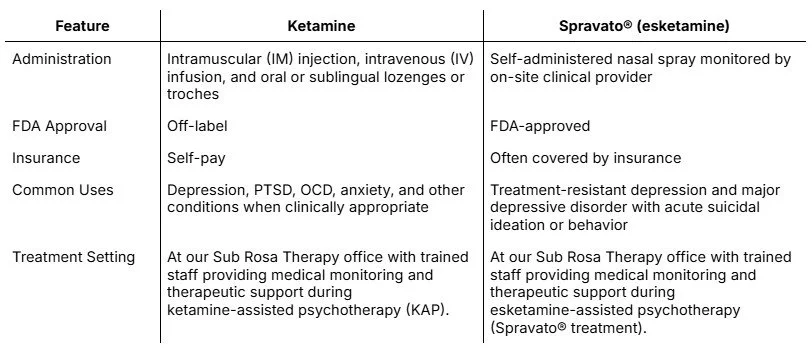
Key Differences Between Ketamine and Spravato® (Esketamine)
Route of Administration & Effects
Ketamine
In KAP sessions at Sub Rosa Therapy, ketamine is primarily administered through intramuscular injection. This method allows the medication to take effect quickly, leading to a rapid onset and a deeper, dissociative therapeutic experience. As a dissociative anesthetic, ketamine temporarily disconnects the conscious mind from physical sensations. At carefully monitored clinical doses, ketamine can produce profound antidepressant effects while treatment takes place in a safe, supportive setting.
Key benefits of ketamine-assisted psychotherapy include:
A surge in the neurotransmitter glutamate. Unlike traditional antidepressants, which primarily target serotonin or norepinephrine, ketamine acts largely through the brain's glutamate system to reduce depressive symptoms.
Enhanced neuroplasticity, supporting the brain's ability to form new neural connections and making it easier to develop healthier emotional and behavioral patterns.
Spravato® (Esketamine)
During Spravato treatment, or esketamine-assisted psychotherapy, Spravato® (esketamine) is delivered as a self-administered nasal spray under clinical supervision.
esketamine is made by separating one part (the "S" enantiomer) of the ketamine molecule through a chemical process because this specific part may be more effective for treating depression.
This delivery method often results in a different absorption rate. Some people describe esketamine as a lighter or more "psycholytic" experience than intramuscular ketamine, although experiences vary significantly by individual.
Clinical studies have shown that Spravato, when used alongside an oral antidepressant, can produce rapid improvements in depressive symptoms for individuals with treatment-resistant depression (Popeva).
What Do Ketamine and Esketamine Feel Like?
Both ketamine and esketamine are classified as dissociative anesthetics. While originally developed for traditional surgery, their effects on the brain are what make them valuable treatments for depression.
As the medication begins to take effect, many people notice a temporary shift in awareness that creates distance from everyday thoughts, emotions, and physical sensations. During this time, it is common to experience mild auditory or visual shifts, alongside feelings of deep calm or euphoria. Every experience is unique and depends on the individual, the dose, and the treatment setting.
In a clinical setting, dosing is carefully individualized, and our extensive onboarding process ensures every client feels prepared, informed, and supported throughout treatment.
Safety & Support During Treatment
Difficult experiences are extremely rare in a clinical setting because every session is supported by specially trained, empathetic personnel. Our staff understands the nuances of the ketamine experience and is there to guide you through any challenging moments.
Whether you're receiving ketamine or Spravato®, safety and treatment quality are our highest priorities. Through careful preparation, medical oversight, and compassionate therapeutic support, we strive to create an environment where clients feel safe enough to engage fully in the healing process.
Reference:
Popeva V, Daly EJ, Trivedi M, et al. Efficacy and safety of flexibly dosed esketamine nasal spray combined with newly initiated oral antidepressant in treatment-resistant depression: a randomized double-blind active controlled study [published online May 21, 2019]. Am J Psychiatry. 2019;176(6):428-438. doi:10.1176/appi.ajp.2019.19020172